Cutting edges are essential wear parts installed on buckets, blades, and grading equipment. They directly contact soil, rock, and other materials during digging, cutting, and pushing operations.
A high-quality cutting edge improves penetration, reduces machine strain, and increases overall productivity. Poor-quality edges wear out quickly and raise maintenance costs.
Before purchasing, you must clearly identify your machine type and application.
Excavators typically use cutting edges designed for digging and trenching tasks. Bulldozers and graders require stronger edges built for continuous pushing and leveling work.
Each machine needs a different edge profile, bolt pattern, and thickness. Matching the correct specification ensures proper installation and safe operation.
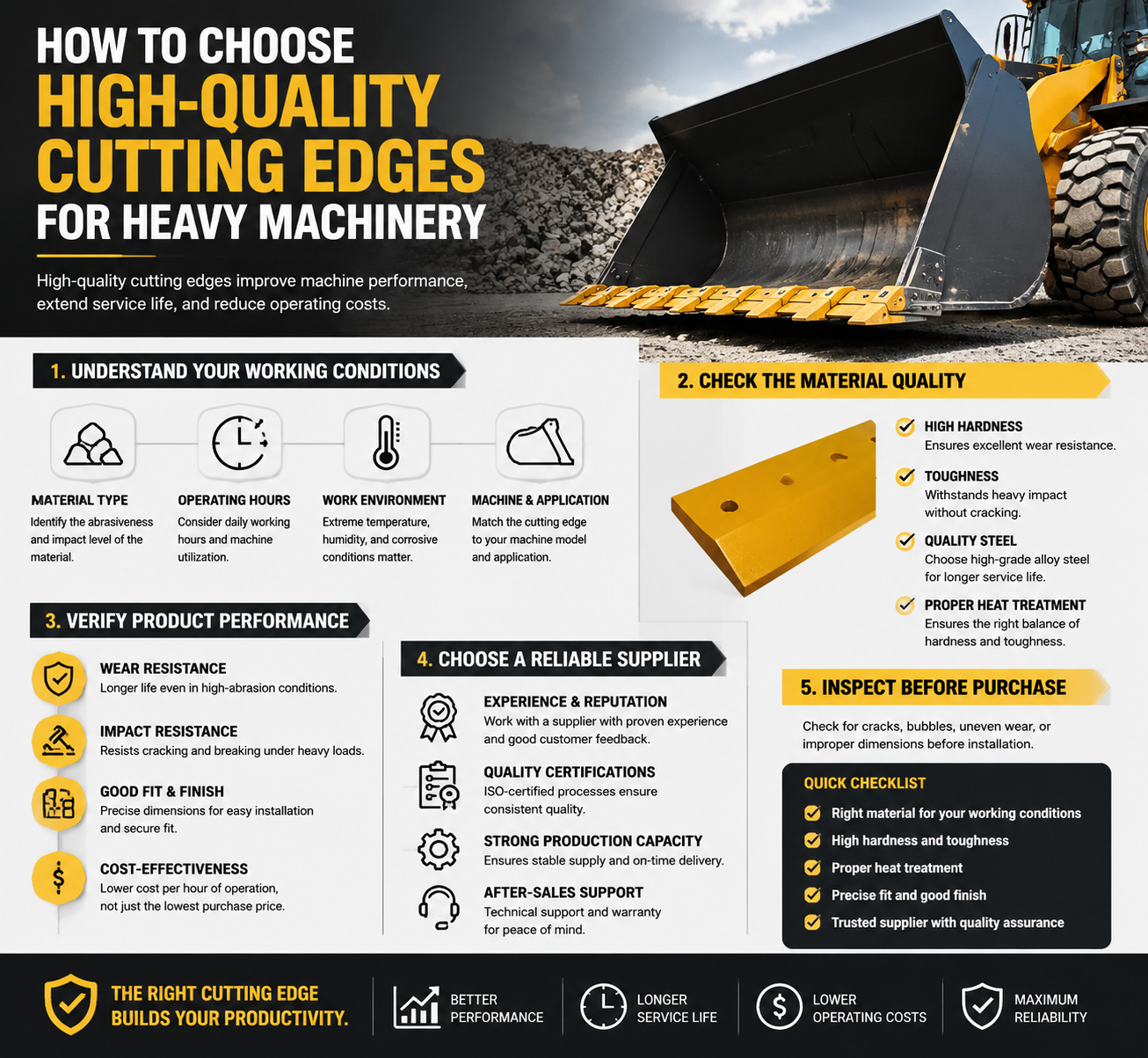
Material quality directly affects cutting edge lifespan and performance.
High-carbon steel and heat-treated alloy steel are the most common choices. These materials offer strong impact resistance and better wear performance in abrasive environments.
For mining or rocky conditions, choose reinforced wear-resistant steel. For light construction work, standard hardened steel may provide sufficient durability.
Hardness plays a key role in cutting edge durability.
A well-heat-treated cutting edge maintains a balance between hardness and toughness. Too soft, and it wears quickly. Too hard, and it may crack under impact.
Look for products with uniform heat treatment across the entire edge to ensure consistent performance in the field.
Proper fitment is critical for safe installation.
Always confirm the bolt hole spacing, thickness, width, and curvature before purchasing. Even small mismatches can cause installation failure or uneven wear.
Using exact specifications helps maintain stability and prevents unnecessary downtime during replacement.
Modern cutting edges often include advanced wear-resistant designs.
Some models use hardened outer layers with tougher inner cores. Others feature reinforced corners or extra material at high-impact zones.
These features extend service life and reduce the frequency of replacements, especially in demanding environments such as quarries or construction sites.
Your working environment should guide your selection.
Rocky terrain requires highly abrasion-resistant cutting edges. Muddy or sandy conditions benefit from self-sharpening designs that maintain efficiency during operation.
Choosing the right edge for the environment helps reduce fuel consumption and improves machine productivity.
Reliable suppliers provide consistent quality and accurate specifications.
Check product certifications, manufacturing standards, and customer feedback before placing an order. A trustworthy source ensures stable quality and reduces the risk of premature failure.
Consistent supply also helps avoid delays in maintenance and replacement schedules.
Selecting the right cutting edge is not just about price. It directly affects machine performance, fuel efficiency, and maintenance cost.
By focusing on machine compatibility, material quality, hardness, dimensions, and working conditions, you can ensure long-lasting performance and lower operating costs.
A well-chosen cutting edge keeps heavy machinery running efficiently in the toughest job sites.
Contact us via TEL / WhatsApp / WeChat Quick response within 12 hours

Production Experience

Export Experience

Quality Guaranteed

Fast & Reliable


 +86 1588 0208980

 doozer@doozergroup.com