Excavators and bulldozers are among the most important machines in construction, mining, and earthmoving projects. Although both rely on crawler undercarriages for mobility, they serve different purposes and operate under different working conditions.
Understanding these differences helps equipment owners select the right undercarriage components, reduce maintenance costs, and improve machine productivity.
An excavator uses a boom, arm, and bucket to perform digging, trenching, lifting, demolition, and material handling tasks. Its upper structure rotates 360 degrees, allowing operators to work efficiently in confined spaces.
Because excavators frequently swing, travel, and dig simultaneously, their undercarriage experiences a combination of vertical loads, side forces, and continuous movement.
Common excavator undercarriage components include:
These parts must provide stability while supporting dynamic operating conditions.
A bulldozer focuses on pushing, grading, leveling, and land clearing. Unlike excavators, bulldozers use a front blade to move large volumes of soil, rock, or debris.
The machine generates constant forward traction and experiences significant ground contact pressure. As a result, bulldozer undercarriages often face intense abrasion and impact, especially in mining and quarry applications.
Key bulldozer undercarriage components include:
These components prioritize durability and traction over maneuverability.
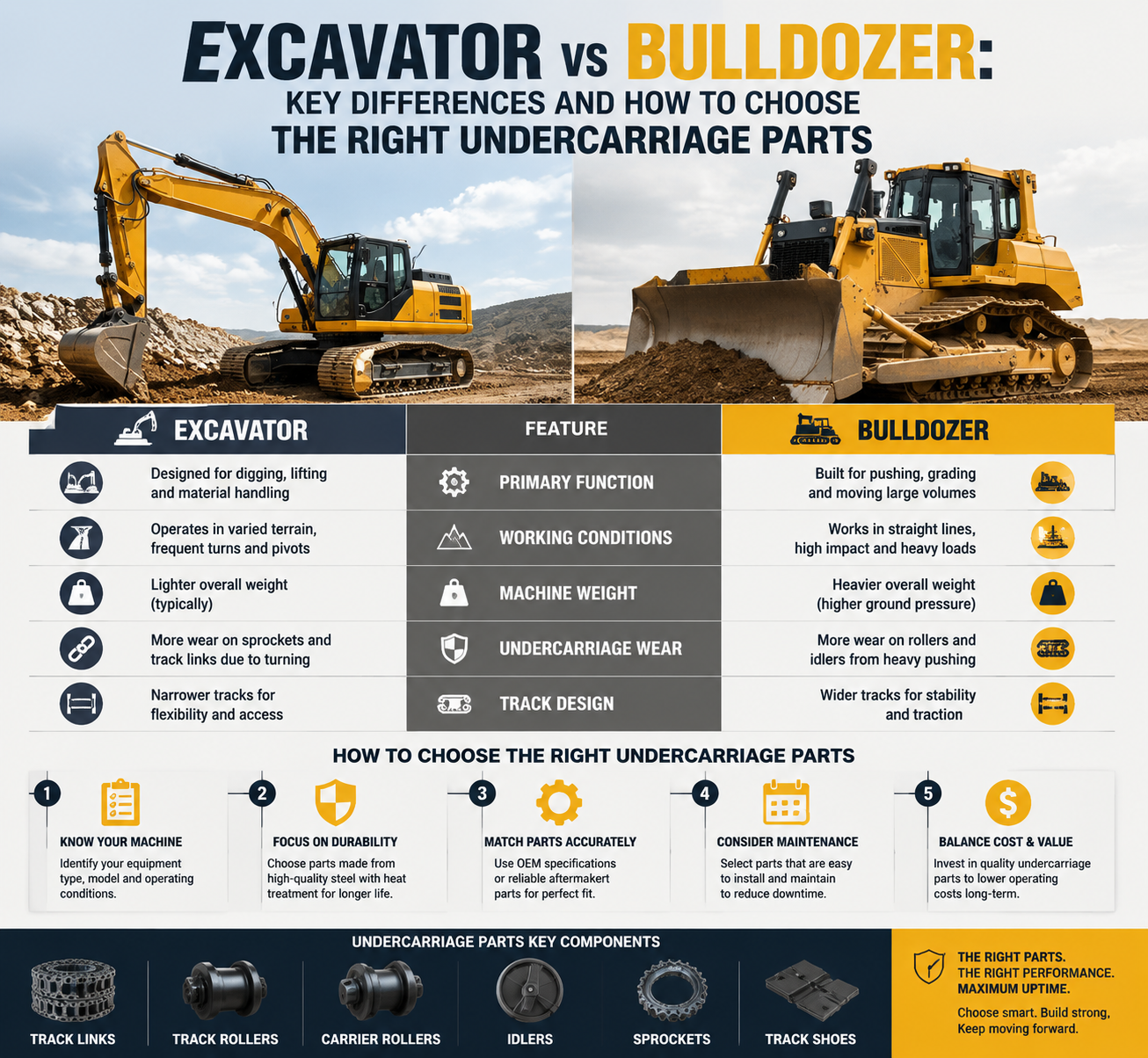
Excavators encounter frequent turning, digging, and repositioning.
Bulldozers spend most of their time pushing heavy loads across rough terrain.
This difference creates unique wear patterns and requires different undercarriage designs.
Excavators concentrate weight around the center of the machine while performing digging operations.
Bulldozers distribute weight more evenly across the tracks during pushing and grading tasks.
Excavator track shoes typically focus on stability and smooth travel.
Bulldozer track shoes often feature larger grousers that increase traction on loose or uneven ground.
Bulldozers generally require more abrasion-resistant undercarriage parts due to constant contact with rocks, soil, and debris.
Excavators need components that balance wear resistance with flexibility and mobility.
Always select undercarriage components specifically designed for excavators or bulldozers. Even similar-looking parts may have different dimensions, load ratings, and performance characteristics.
Using the wrong component can accelerate wear and reduce machine efficiency.
Operating conditions greatly affect undercarriage lifespan.
For rocky mining applications, choose components with enhanced wear resistance and deeper heat treatment.
For muddy or soft ground conditions, prioritize designs that improve self-cleaning performance and reduce material buildup.
High-quality undercarriage parts typically use forged or alloy steel combined with advanced heat treatment processes.
Premium materials offer:
Investing in quality parts often reduces long-term operating costs.
Rollers and idlers operate in harsh environments filled with dust, water, and abrasive materials.
Strong sealing systems help retain lubrication and protect internal components from contamination.
Reliable sealing technology often translates into longer maintenance intervals and improved durability.
Always verify OEM part numbers, machine models, and dimensional specifications before purchasing.
Proper fitment ensures smooth installation and optimal performance while reducing the risk of premature failures.
Choosing suitable undercarriage components delivers several advantages:
A well-matched undercarriage system supports both reliability and profitability throughout the machine’s service life.
Excavators and bulldozers may share a crawler undercarriage design, but their operating conditions and performance requirements differ significantly. Excavators demand flexibility and stability for digging operations, while bulldozers require maximum durability and traction for pushing heavy loads.
When selecting undercarriage parts, focus on machine type, working environment, material quality, sealing performance, and compatibility. The right choice can improve productivity, reduce operating costs, and maximize equipment uptime for years to come.
Contact us via TEL / WhatsApp / WeChat Quick response within 12 hours

Production Experience

Export Experience

Quality Guaranteed

Fast & Reliable


 +86 1588 0208980

 doozer@doozergroup.com