In the demanding world of heavy construction and mining, an excavator’s undercarriage is its foundation. It represents a significant portion of the machine’s lifetime maintenance costs. While component wear is inevitable, operators and fleet managers can drastically influence their bottom line by optimizing the performance and lifespan of one critical component: the drive sprocket.
This ultimate guide explores how choosing premium drive sprockets—far from a simple commodity purchase—is a strategic investment that maximizes machine uptime, boosts fuel efficiency, and protects the entire final drive system.
The Critical Role of the Drive Sprocket
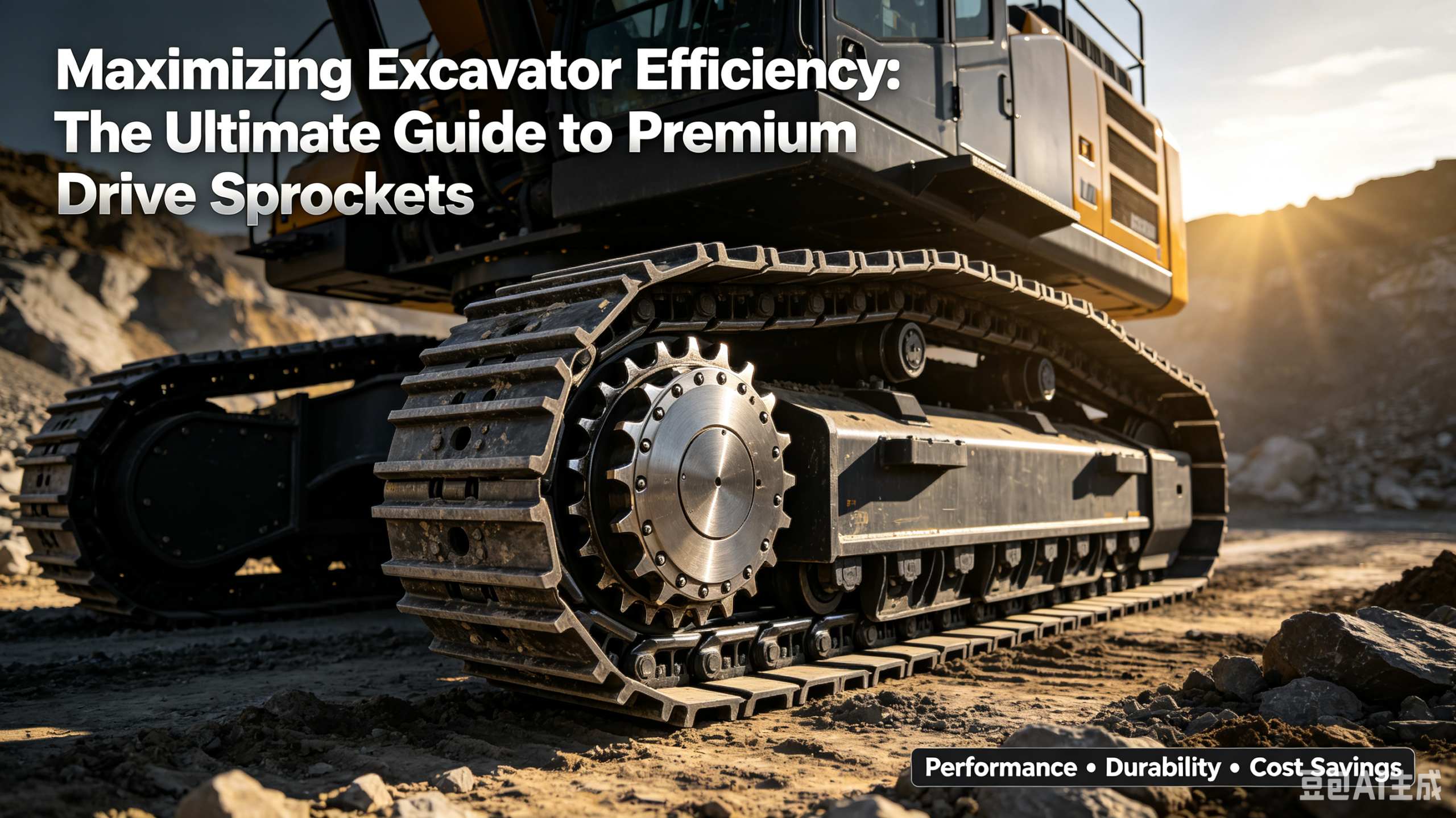
The drive sprocket is the “heart” of the undercarriage’s power transmission. Bolted directly to the final drive motor, its sole function is to transfer the immense hydraulic torque from the engine into tangible tractive effort by engaging with the track chain links.
A premium sprocket performs this task with minimal friction, maximum grip, and exact synchronization. When a sprocket functions perfectly, the excavator maneuvers smoothly, climbs efficiently, and delivers full digging power. When it is worn or poorly made, it becomes a major bottleneck, draining power and accelerating wear on adjacent components.
1. Why Invest in “Premium”? The Performance Advantage
The distinction between a standard sprocket and a “premium” alternative lies in material science, engineering precision, and heat treatment. Premium manufacturers, whether OEM or specialized aftermarket brands, focus on three key pillars:
A. Controlled Heat Treatment (The Secret Sauce)
The single most determinant factor of sprocket longevity is the precise control of the hardening process.
Induction Hardening: Premium sprockets undergo induction hardening of the tooth profiles and roots. This creates a hard, wear-resistant “shell” (often 50–55 HRC) while leaving the core of the sprocket ductile and tough.
The Depth of Hardness: Cheap sprockets might have a thin hardened layer that wears away quickly, exposing soft material that fails exponentially faster. Premium sprockets ensure a deep, consistent hardened zone that maintains the tooth profile for thousands of operating hours.
Tempering: Post-hardening tempering is critical to remove internal stresses and prevent brittle fracture under impact loads.
B. Precision Tooth Profile Engineering
The geometry of a sprocket tooth is not arbitrary. It must precisely match the pitch of the track chain.
Exact Meshing: Premium sprockets are engineered to the exact OEM specification for tooth count, pitch diameter, and flank profile. This ensures that the track bushings seat perfectly within the tooth pocket.
Reduced Friction: When the fit is exact, friction is minimized. The track moves smoothly. When the profile is inaccurate, the chain must “scrub” its way into the pocket, causing immense heat and accelerated wear on both the sprocket teeth and the track bushings.
C. Superior Base Materials
Premium sprockets typically utilize high-grade alloy steels (like 40Cr or 20Mn) that offer the optimal balance of hardenability, fatigue strength, and impact toughness. They can withstand the constant cyclical loading and shock impacts of rough terrain without cracking.
2. The Direct Link: Sprocket Quality and Fleet Efficiency
Maximizing efficiency means maximizing output while minimizing input (cost and time).
| How Premium Sprockets Impact Efficiency | Mechanism | Bottom Line |
| Fuel Efficiency | Accurate tooth profiles reduce internal friction and resistance within the undercarriage system. The engine does not have to work as hard to move the same weight. | Significant reduction in lifetime fuel consumption. |
| Final Drive Protection | A smooth-running sprocket minimizes shock loads and vibration being transmitted back into the delicate bearings and gears of the final drive motor. | Prevents catastrophic final drive failures, one of the most expensive excavator repairs. |
| Undercarriage Component Life | When a sprocket maintains its profile, it does not stretch or damage the track chain links and bushings prematurely. | Doubles or triples the lifespan of the entire track group. |
| Machine Uptime | Long-lasting sprockets (4,000 to 8,000+ hours) require fewer replacements. | Maximizes the time the machine is generating revenue on site. |
3. Recognizing the Signs of Wear
Waiting for a component to fail before replacing it is the opposite of efficiency. To prevent collateral damage to the final drive and tracks, you must recognize the early warning signs of a failing sprocket.
1. Sharp, Pointy, or “Hooked” Teeth: This is the most visual indicator. Healthy sprocket teeth have a rounded, symmetrical profile. As they wear, they become sharp, and eventually, the tips may “hook” forward. A hooked tooth pulls the track bushing along the flank rather than letting it sit in the pocket, causing extreme wear on the track links.
2. Increased Chain Noise and Vibration: A worn sprocket will no longer mesh smoothly. You may notice “pop,” “grind,” or “snap” sounds, especially when reversing or turning, as the teeth fail to release the track bushings cleanly.
3. Skipping or Derailment: If the teeth wear down excessively, they lose their ability to grip the track. Under heavy load or on an incline, the sprocket may skip over teeth (chain slip). If it skips while turning, it can derail the track entirely.
4. Track Tension Issues: A worn sprocket cannot effectively maintain the proper track tension. This leads to excessive track sag, further accelerating wear on rollers and idlers.
The Golden Rule of Undercarriage Maintenance: Never put a new track chain on heavily worn sprockets, or vice versa. Mismatched components will destroy each other rapidly.
4. Choosing the Right Premium Sprocket
Selecting the correct replacement requires technical understanding, not just a part number search.
A. Single-Piece vs. Segmented
Single-Piece: Common on mini excavators and compact loaders. They are durable and strong, often a direct bolt-on from the final drive.
Segmented (Segments): Used on large excavators and dozers. They are much easier and faster to replace. You can change worn segments without breaking the track chain, significantly reducing downtime. Premium segments must mesh perfectly with each other to ensure a smooth circumference.
B. Critical Specifications
When sourcing, ensure the supplier verifies these specifications exactly to your machine’s Serial Number/Model:
Tooth Count: Directly affects the final drive ratio and speed/torque characteristics.
Pitch: The distance between tooth centers. Must precisely match the track link pitch.
Bore Diameter and Bolt Pattern: Must mate perfectly to the final drive hub.
Flank Width: Determines the contact surface area with the track bushing.
C. Supplier Verification
A premium supplier is not just selling a part; they are selling peace of mind.
Look for Transparency: Can they provide information on their steel grade, heat-treatment method (e.g., specific tempering temperatures), and hardness depth?
Warranty: Do they stand behind their product with a functional warranty?
Cross-Reference Accuracy: Can they guarantee their aftermarket part matches the OEM specification for your exact serial number, not just the model number?
Conclusion: Investing in Uptime
Maximizing excavator efficiency requires a mindset shift away from short-term “saving on parts” and towards long-term “minimizing cost per hour.“
While a premium drive sprocket might have a slightly higher upfront cost, its deep induction hardening, precision-engineered teeth, and superior alloy steel provide a compounded return on investment. It protects your most expensive components—the final drive and track groups—ensures your machine burns less fuel, and keeps your operator productive on the job site for thousands of additional hours. In the ultimate calculation of fleet profitability, the premium sprocket is always the most economical choice.
Contact us via TEL / WhatsApp / WeChat Quick response within 12 hours

Production Experience

Export Experience

Quality Guaranteed

Fast & Reliable


 +86 1588 0208980

 doozer@doozergroup.com