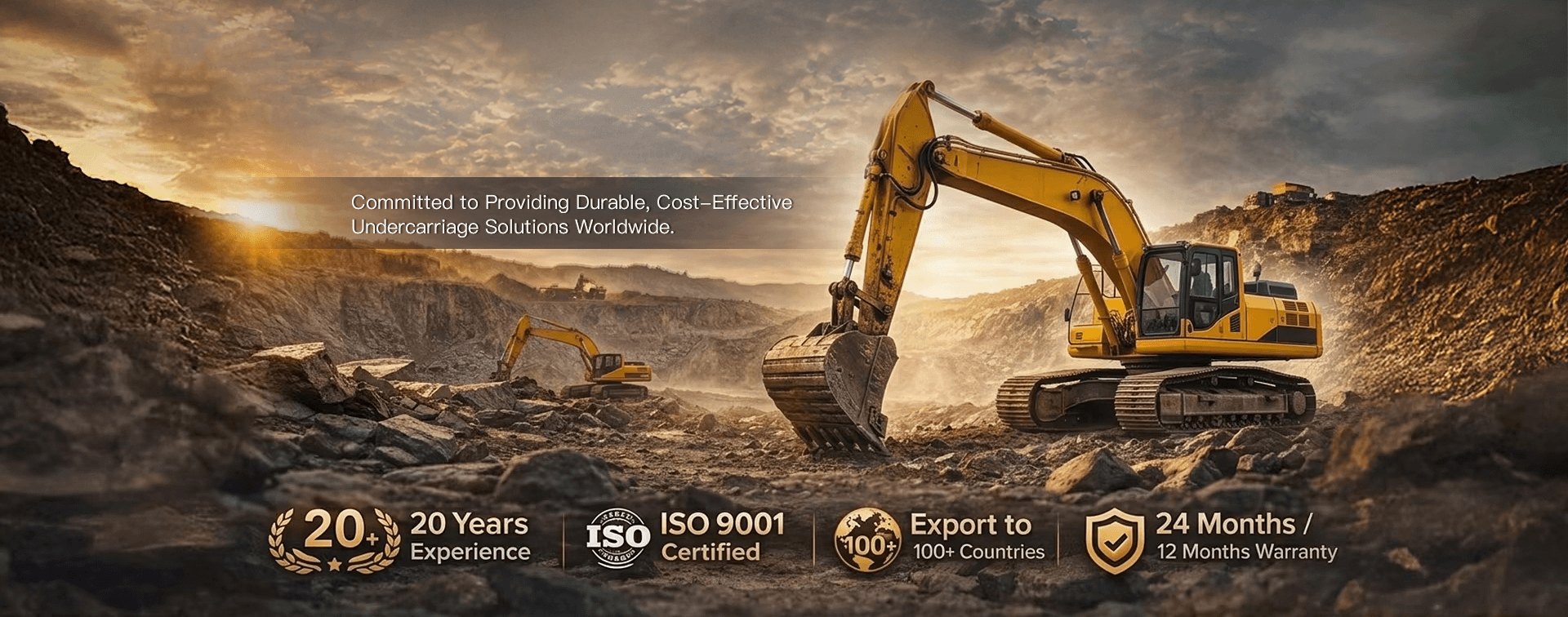
Excavator track shoes play an essential role in supporting machine weight, providing traction, and maintaining stability on construction sites, mining areas, and uneven terrain. However, continuous contact with abrasive soil, rocks, mud, and other materials can gradually damage their surfaces. Without proper care, excessive wear or loose fasteners may lead to costly repairs and unexpected equipment downtime.
For contractors, fleet managers, and equipment operators, regular excavator track shoe maintenance is a practical way to protect undercarriage components and improve operating efficiency. This guide explains how to inspect, clean, and maintain track shoes for longer service life.
1. Clean Excavator Track Shoes After Operation
Mud, gravel, and compacted soil can accumulate between track shoes and around the track chain. These materials may interfere with normal track movement and make it harder to identify cracks or other damage.
After working in muddy, wet, or rocky conditions, remove accumulated debris using suitable cleaning tools. Pay particular attention to the grouser bars, bolt areas, and spaces between adjacent track shoes.
For machines operating in abrasive environments, more frequent cleaning helps prevent debris buildup and makes routine inspections more effective. Allow the undercarriage to be inspected safely before returning the excavator to service.
2. Inspect Track Shoe Bolts and Fasteners
Track shoe bolts secure each shoe to the track links. Repeated vibration, heavy loading, and impacts can contribute to loose or damaged fasteners.
During routine inspections, check for missing bolts, damaged threads, loose nuts, and signs of movement around mounting holes. Replace defective fasteners with parts that meet the equipment manufacturer’s specifications.
When installing replacement track shoes, follow the manufacturer’s tightening sequence and specified torque values. Avoid guessing the required torque, as incorrect tightening can damage threads or compromise the connection.
3. Monitor Wear, Cracks, and Deformation
Track shoes gradually lose material as they move across hard or abrasive surfaces. Worn grouser bars may reduce traction, while cracks and deformation can affect structural reliability.

Inspect the following areas regularly:
Replace track shoes when wear exceeds the equipment manufacturer’s limits or when structural damage makes continued operation unsafe. Do not rely on a universal replacement threshold because acceptable wear depends on the shoe design and working conditions.
4. Maintain Correct Track Tension
Track tension influences the performance and wear rate of the entire excavator undercarriage. Excessively tight tracks can increase resistance and accelerate wear on track shoes, rollers, idlers, and track links. Tracks that are too loose may increase the risk of derailment.
Check track sag according to the machine manufacturer’s maintenance procedure. The correct measurement method and specification can vary by excavator model and undercarriage configuration.
Adjust tension when necessary and inspect the system for trapped stones or other obstructions that may affect movement. Correct tension helps maintain stable operation and reduces unnecessary stress on undercarriage parts.
5. Adjust Operating Practices to Ground Conditions
Operating habits have a direct impact on track shoe wear. Frequent sharp turns, unnecessary counter-rotation, high-speed travel over rough ground, and repeated impacts against hard obstacles can accelerate damage.
Whenever possible, use smooth steering movements and select travel speeds appropriate for the terrain. Choose track shoe width and grouser configuration according to the machine specifications and the ground conditions.
For mining and demolition applications, regular inspections are particularly important because sharp rocks and heavy impacts can cause rapid wear or deformation.
6. Choose Compatible Replacement Track Shoes
Even with consistent maintenance, track shoes eventually require replacement. Selecting the correct replacement is essential for reliable installation and undercarriage performance.
Before ordering, confirm the excavator model, track shoe dimensions, bolt-hole spacing, grouser configuration, and applicable part number. Material quality and manufacturing processes should also be considered when comparing suppliers.
Xiamen Doozer manufactures undercarriage parts for excavators and bulldozers, including track shoes, track chains, rollers, idlers, and drive sprockets. With 20 years of manufacturing experience, Xiamen Doozer supports customers looking for replacement parts for construction and mining equipment.
Buyers can provide their machine model or parts list to help verify compatibility before placing an order.
Conclusion
Proper excavator track shoe maintenance starts with regular cleaning, fastener inspections, wear monitoring, correct track tension, and careful operating practices. These measures help identify problems early, protect related undercarriage components, and reduce avoidable downtime.
When replacement becomes necessary, choose track shoes that match the machine’s specifications and intended working conditions. Combining preventive maintenance with correctly matched replacement parts helps keep excavators operating reliably across demanding construction and mining environments.
Contact us via TEL / WhatsApp / WeChat Quick response within 12 hours

Production Experience

Export Experience

Quality Guaranteed

Fast & Reliable


 +86 1588 0208980

 doozer@doozergroup.com