
An excavator carrier roller, also known as an upper roller, supports the upper section of the track chain and helps maintain smooth track movement. Operating in mud, sand, gravel, and rocky environments exposes this component to continuous friction, vibration, and contamination.
When a carrier roller becomes worn or damaged, the track may move unevenly, increasing stress on other undercarriage components. Regular inspection and proper maintenance can help identify problems early, reduce unexpected downtime, and control repair costs.
At Xiamen Doozer, we manufacture and supply undercarriage parts for excavators and bulldozers, helping equipment owners and parts distributors find suitable replacement components for their machinery.
1. Clean Carrier Rollers After Demanding Operations
Mud, stones, sand, and compacted soil can accumulate around the carrier roller and track chain. These materials may interfere with smooth movement and make it difficult to identify early signs of wear.
After working in muddy or abrasive conditions, remove accumulated debris from the undercarriage. Pay particular attention to the roller surface, track chain, and surrounding frame.
Use suitable cleaning equipment and avoid directing excessive pressure at sealing areas. Once cleaning is complete, inspect the component for visible damage, abnormal wear, and lubricant leakage.
Regular cleaning also makes routine inspections more effective.
2. Inspect Roller Surfaces and Sealing Areas
A visual inspection can reveal many developing carrier roller problems. Check the roller surface for deep grooves, cracks, chipped edges, and uneven wear. Examine the sealing areas for signs of lubricant leakage or physical damage.
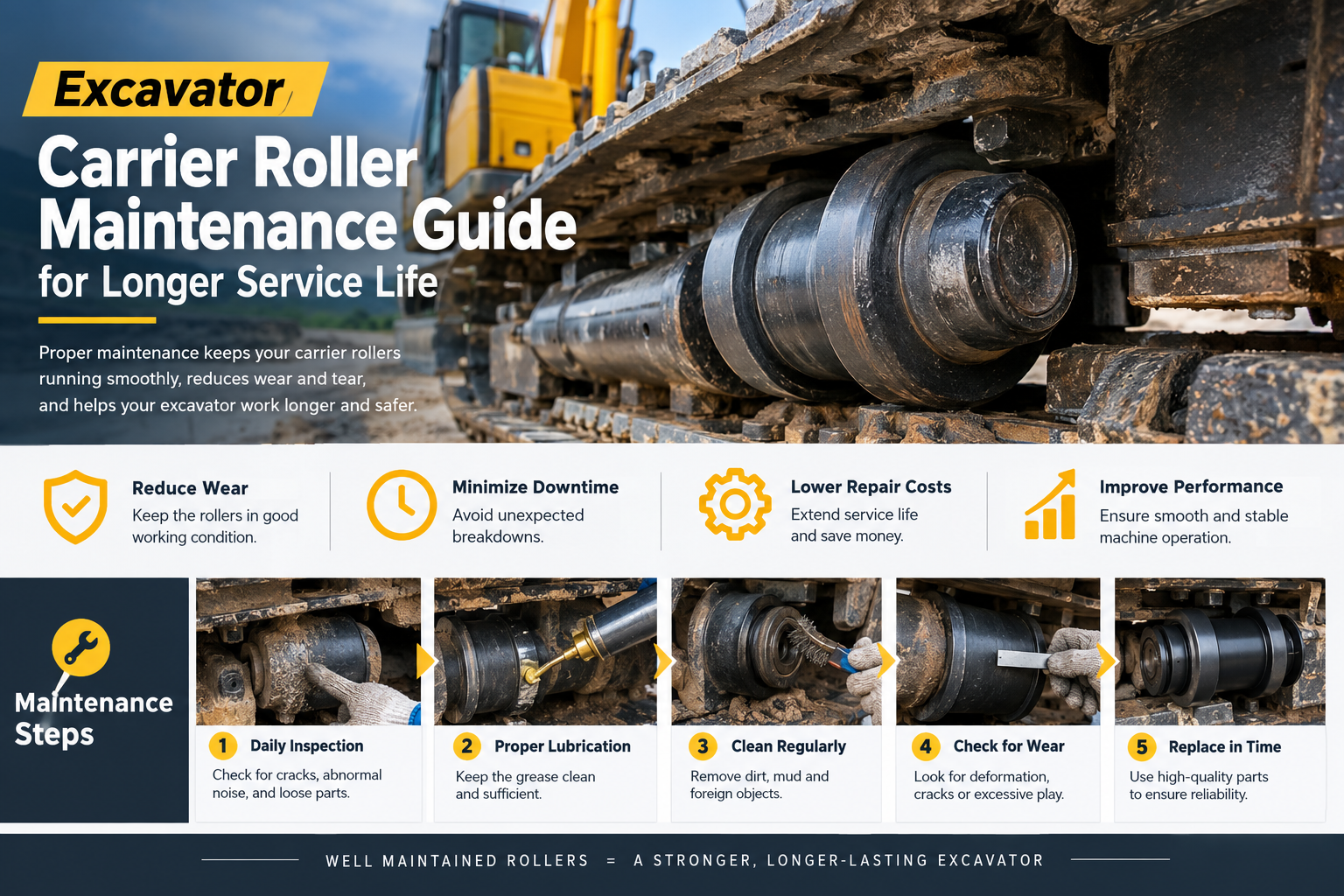
Watch for these warning signs:
Do not diagnose every problem from appearance alone. If the roller shows serious damage, arrange a professional inspection before returning the machine to demanding work.
3. Maintain Correct Track Tension
Track tension directly affects the workload placed on carrier rollers and other undercarriage components.
Excessively tight tracks create additional resistance and increase mechanical loads. Tracks that are too loose may sag excessively, move irregularly, or increase the risk of derailment.
Check track tension according to the excavator manufacturer’s maintenance instructions. The correct adjustment depends on the machine model and operating conditions, so avoid using one universal measurement for every excavator.
If a carrier roller wears unusually quickly, inspect the track tension and related undercarriage components before installing a replacement. Correcting the underlying cause helps prevent repeated failures.
4. Follow the Recommended Lubrication Procedure
Carrier roller lubrication and sealing arrangements vary by product design. Some rollers contain sealed, lubricated internal assemblies that are not intended for routine disassembly, while other designs may have specific service requirements.
Always follow the equipment and component manufacturer’s instructions. Do not add grease or oil unless the design provides for it.
During maintenance, look for leakage, damaged seals, and signs of internal friction. If lubricant loss or abnormal rotation is detected, have the assembly inspected and repaired or replaced as appropriate.
Correct maintenance helps protect internal components from premature damage.
5. Know When to Replace a Carrier Roller
Replacement should be considered when a carrier roller can no longer support or guide the track chain properly. Common reasons include severe surface wear, structural cracks, persistent lubricant leakage, seized rotation, and excessive abnormal noise.
Before ordering a replacement, confirm the excavator model, roller position, mounting dimensions, and available OEM part number. Similar-looking rollers may have different dimensions or mounting arrangements.
After installation, check the mounting hardware, track alignment, and track tension according to the manufacturer’s procedures. Inspect the surrounding undercarriage to determine whether other worn components also require attention.
6. Choose Suitable Replacement Parts
A reliable replacement carrier roller should match the machine’s specifications and operating requirements. Material quality, machining accuracy, sealing design, and manufacturing consistency are important factors to consider.
Xiamen Doozer supplies undercarriage components for a range of excavator and bulldozer applications, including carrier rollers, track rollers, track chains, front idlers, sprockets, and track shoes.
Our team can help customers identify suitable replacement parts using machine information and part references. Providing accurate details before ordering helps reduce compatibility issues and unnecessary delays.
Keep Your Excavator Undercarriage in Better Condition
Consistent cleaning, regular inspection, correct track tension, and timely replacement are essential practices for maintaining excavator carrier rollers. Addressing abnormal wear early can help protect connected undercarriage components and reduce avoidable downtime.
For excavator carrier rollers and other undercarriage replacement parts, contact Xiamen Doozer with your machine model or OEM part number to discuss your requirements.
Contact us via TEL / WhatsApp / WeChat Quick response within 12 hours

Production Experience

Export Experience

Quality Guaranteed

Fast & Reliable



 +86 1588 0208980

 doozer@doozergroup.com