
Track bolts and nuts are essential fasteners in excavator and bulldozer undercarriage systems. They secure track shoes to track links and help maintain a stable connection during digging, earthmoving, and other demanding operations.
During daily work, these fasteners experience repeated vibration, impact, dirt, moisture, and heavy loads. Without proper maintenance, bolts may loosen, threads can become damaged, and track shoes may move against the chain links. These problems can lead to accelerated wear, unexpected repairs, and costly machine downtime.
Xiamen Doozer supplies undercarriage parts for excavators and bulldozers, including track bolts and nuts. Following a consistent inspection and maintenance routine helps equipment owners identify potential problems before they develop into more serious failures.
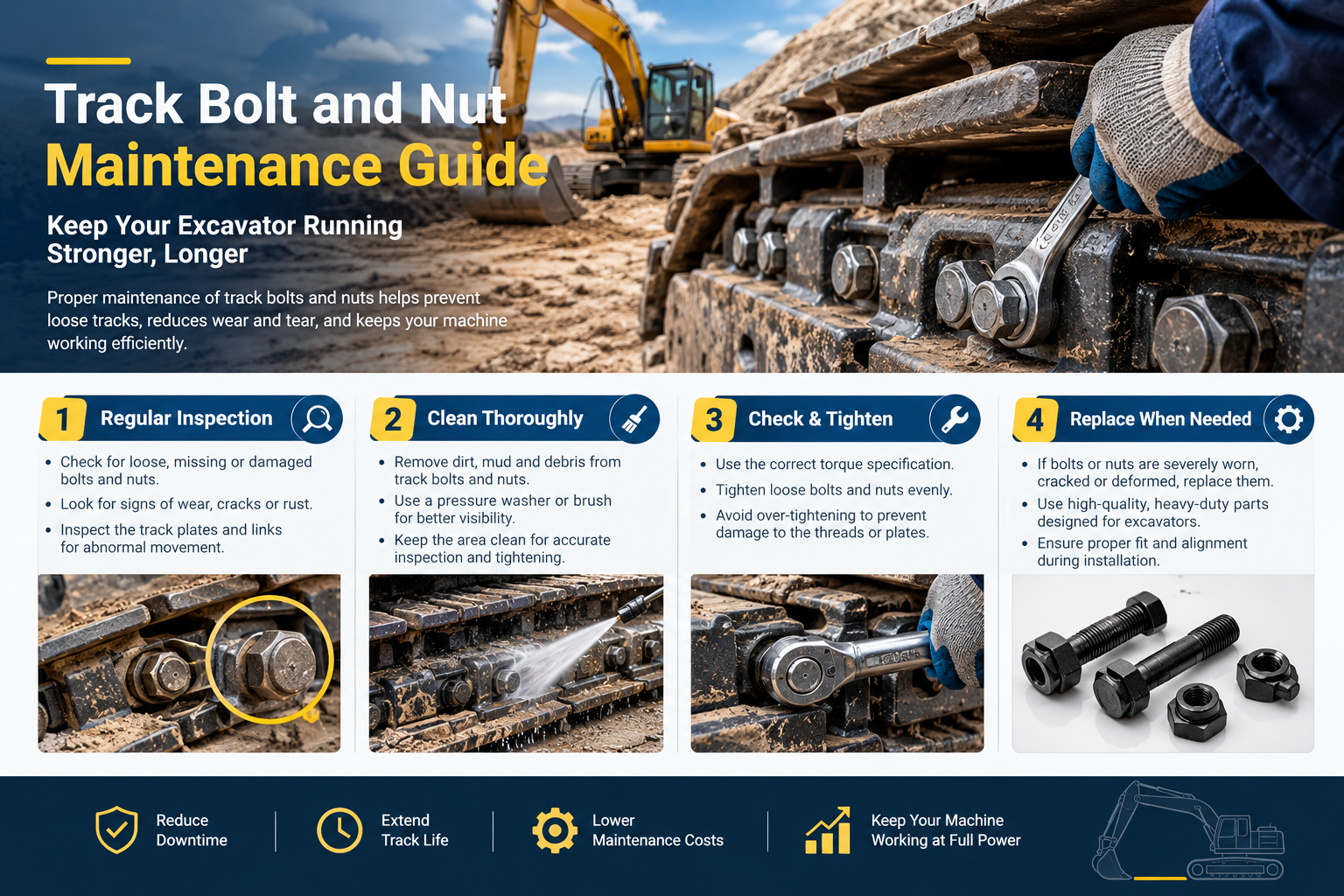
1. Inspect Track Bolts and Nuts Regularly
Visual inspection is the first step in maintaining track fasteners. Operators and maintenance technicians should check the undercarriage regularly, especially when machines work in rocky, muddy, or high-impact environments.
Pay attention to these warning signs:
Follow the equipment manufacturer’s inspection schedule and increase inspection frequency when working conditions are particularly severe.
2. Use the Correct Tightening Procedure
Correct tightening is essential for keeping track shoes securely attached to the track chain. Insufficient tightening can allow movement between connected components, while excessive tightening may stretch bolts, damage threads, or cause premature failure.
Before installation, clean the mating surfaces and inspect the bolt holes. Confirm that the replacement fasteners match the required dimensions, thread specifications, head design, and strength grade.
Install the bolts and nuts according to the manufacturer’s recommended sequence. Use a calibrated torque wrench and follow the specified torque values for the exact machine and fastener application. Do not rely on a universal torque value, as requirements vary by bolt size, grade, joint design, and installation conditions.
Avoid applying lubricants or thread-locking compounds unless the equipment manufacturer specifically recommends them. These products can affect the relationship between tightening torque and bolt clamping force.
3. Replace Worn or Damaged Fasteners Promptly
Track bolts and nuts should be replaced when they show significant thread damage, deformation, cracking, or other defects that compromise secure fastening.
When replacing fasteners, select parts that match the original equipment specifications. Incorrect bolt length, thread pitch, head shape, or strength grade can affect installation and joint reliability.
Inspect the associated track shoes and chain links at the same time. Enlarged mounting holes, cracks, or damaged contact surfaces may indicate that a problem extends beyond the fasteners themselves.
Avoid reusing damaged or permanently stretched bolts. Replace the affected hardware with compatible parts and follow the manufacturer’s service procedures to restore a secure connection.
4. Keep Fasteners Clean and Protect Against Corrosion
Mud, abrasive dust, and moisture can make inspections more difficult and contribute to corrosion. Cleaning the undercarriage after operation helps technicians identify loose fasteners and damaged components more easily.
Remove accumulated dirt from accessible areas using suitable cleaning methods. Avoid aggressive techniques that could damage seals, coatings, or nearby components.
After cleaning, inspect exposed metal surfaces and check whether the specified corrosion protection remains effective. Apply protective products only where appropriate for the equipment and installation requirements.
Cleanliness also improves the accuracy of visual inspections and helps prevent contaminants from interfering with proper component assembly.
5. Choose Compatible Track Bolts and Nuts
Selecting the correct fasteners is just as important as maintaining them. Before purchasing replacement parts, confirm the machine model, track shoe configuration, bolt dimensions, thread pitch, and required strength specifications.
Xiamen Doozer provides undercarriage components for excavators and bulldozers, helping buyers source parts for different machinery applications. To improve compatibility, provide the machine model, original part number, or detailed measurements when requesting a quotation.
Working with accurate specifications helps reduce ordering errors and unnecessary installation delays.
Conclusion
Proper track bolt and nut maintenance supports undercarriage reliability, helps prevent avoidable component damage, and reduces the risk of unexpected downtime. Regular inspections, correct tightening procedures, timely replacement, and accurate part selection all contribute to dependable equipment operation.
Xiamen Doozer supplies excavator and bulldozer undercarriage parts for construction machinery applications. Contact our team with your machine model or part number to identify suitable replacement fasteners and other undercarriage components.
Contact us via TEL / WhatsApp / WeChat Quick response within 12 hours

Production Experience

Export Experience

Quality Guaranteed

Fast & Reliable


 +86 1588 0208980

 doozer@doozergroup.com