High-quality excavator bucket teeth form the core of efficient earthmoving and excavation operations. Manufacturers utilize high-strength alloy steel through advanced casting or forging techniques to create these essential components. A thorough heat treatment process optimizes their internal structure, providing excellent hardness and impact resistance. This meticulous manufacturing approach ensures that the tips withstand the extreme friction of rocky soils and heavy debris. Furthermore, computer-aided design (CAD) allows engineers to create scientifically optimized tooth profiles. These shapes minimize digging resistance, maximize weight distribution, and lower the overall mechanical stress on the excavator arm.
Operators select specific tooth profiles to match their exact job site conditions and boost work productivity.
Standard Teeth: This versatile design works best for daily earthmoving tasks, general excavation, and standard site preparation. It offers a balanced ratio between cost-efficiency and reliable wear life.
Heavy-Duty Teeth: Contractors choose this option for high-intensity mining, rock handling, and compacted soil penetration. The design features a significantly thickened tip to resist high-impact forces.
General-Purpose Teeth: These teeth accommodate frequent site changes and diverse soil blends. They allow fleet managers to simplify inventory since the same tooth fits multiple operating scenarios.
Specialty Teeth: Engineered for distinct environments like river dredging or light agricultural grading, these custom options focus either on lightweight efficiency or reinforced edge protection.
Modern manufacturing ensures that high-quality bucket teeth align perfectly with a wide array of global equipment brands. Precision designs allow seamless installation onto machinery from Caterpillar, Komatsu, Hitachi, Volvo, Kobelco, Doosan, Hyundai, Sany, and XCMG. Excellent mechanical compatibility means a single fleet owner can purchase unified parts to service a mixed fleet. This cross-brand adaptability eliminates the complex logistics of sourcing separate components, lowers spare parts storage costs, and guarantees structural stability during heavy operations.
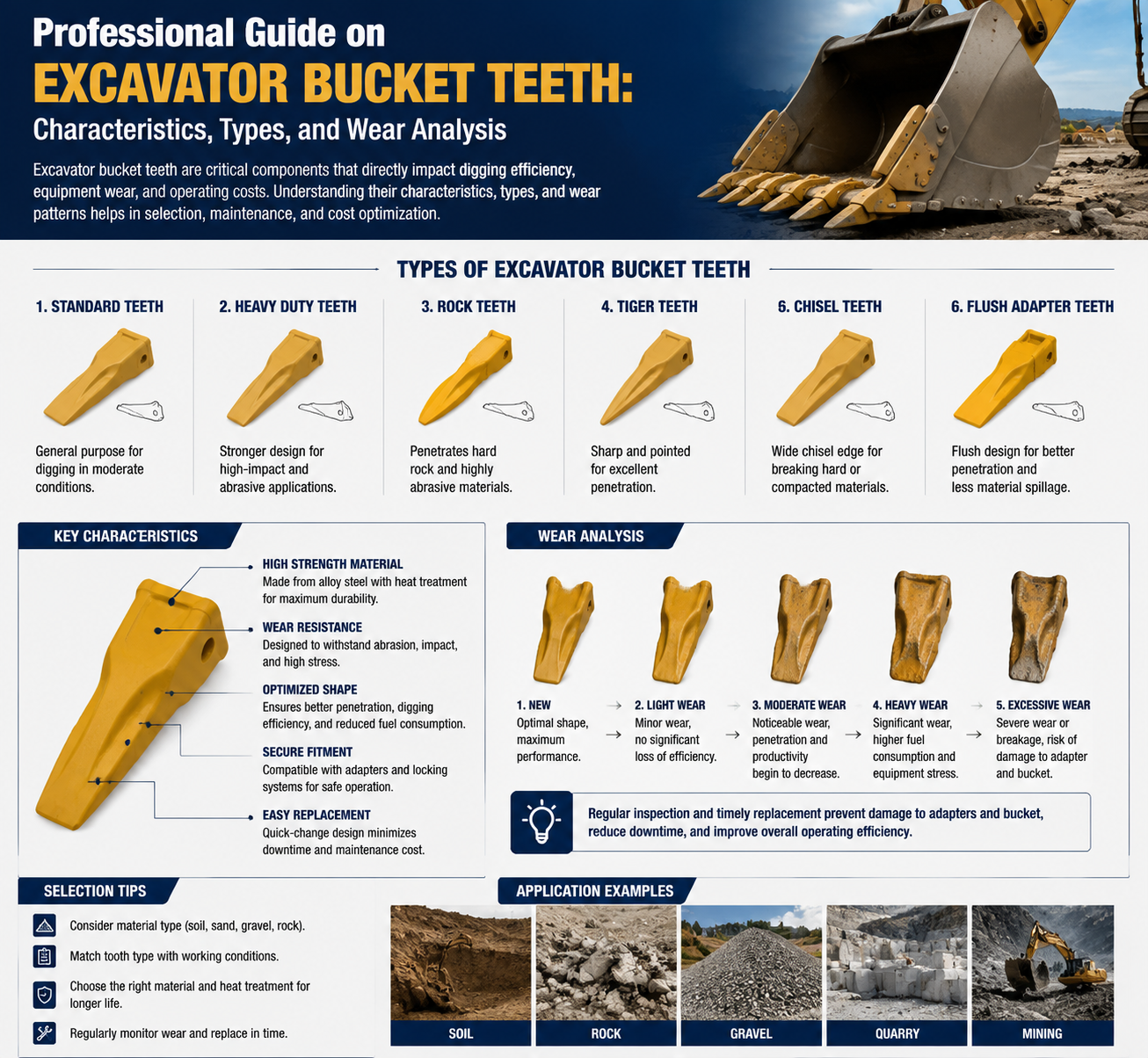
Several operational variables directly control how fast excavator bucket teeth degrade over time. Ground conditions serve as the primary factor; sharp sandy environments grind down the outer tips, whereas solid rocks generate intense impact forces that cause chipping. Operating frequency and continuous heavy-duty cycles naturally accelerate this metal erosion. Additionally, improper driver habits, such as striking boulders at incorrect angles or applying sudden jerking motions, dramatically increase the risk of premature stress cracks and structural breakage.
Implementing a strict maintenance protocol protects your machinery investment and prevents costly project delays. Ground crews must conduct daily visual inspections to look for severe flattening, visible stress fractures, or missing hardware. Teams should immediately replace excessively worn teeth before the degradation damages the actual bucket lip or adapter. Always utilize high-strength locking pins during installation to secure the teeth properly. Finally, keeping detailed operational logs helps tracking the lifespan of components, allowing purchasing managers to optimize future procurement schedules.
Contact us via TEL / WhatsApp / WeChat Quick response within 12 hours

Production Experience

Export Experience

Quality Guaranteed

Fast & Reliable



 +86 1588 0208980

 doozer@doozergroup.com