In construction machinery operations, excavators consistently face demanding, harsh, and complex working conditions in mining, quarrying, and road construction. As a critical wear-resistant component within the crawler undercarriage system, track rollers silently support the heavy weight of the entire machine while guiding the track chain forward. Industry data reveals that undercarriage maintenance costs usually account for 40% to 60% of the total equipment maintenance budget. Therefore, understanding the core value of track rollers and mastering scientific maintenance practices helps equipment owners minimize downtime and extend machine service life.
The core task of track rollers is highly defined: they directly carry the immense weight of the excavator and ensure that the machine moves smoothly across diverse terrains. When high-quality track rollers operate in unison, they significantly minimize the severe vibration between the track shoes and the link assembly. This stabilization creates a smoother operation experience for operators and simultaneously safeguards other precision components on the undercarriage.
When excavators operate under heavy-duty conditions for long durations, quality track rollers guide the track movement accurately, effectively preventing track derailment or uneven wear. Stable component performance guarantees continuous construction workflows and enhances daily project output.
Track roller products available in the market vary significantly in quality. Whether a track roller possesses reliable wear resistance and impact strength depends primarily on four core technical elements:
Material Quality: Premium products utilize high-strength alloy steel for manufacturing the roller shell. This material inherently delivers excellent wear resistance and impact strength to withstand constant friction from hard rocks and sand.
Heat Treatment Process: A precisely controlled heat treatment process provides the track roller with ideal surface hardness while maintaining core toughness. This balanced structural configuration prevents the roller body from cracking under intense external impacts.
Sealing and Lubrication System: Track rollers rely on a precise internal sealing design. Reliable mechanical seals isolate external mud, water, and dust completely, preventing lubricant leakage and ensuring that internal bearings remain well-lubricated.
Operating Environment Compatibility: Track roller wear rates vary drastically across different working environments. General earthmoving projects cause minimal wear, whereas mining and quarrying applications subject components to high impacts and abrasive conditions, necessitating heavy-duty reinforced track rollers.
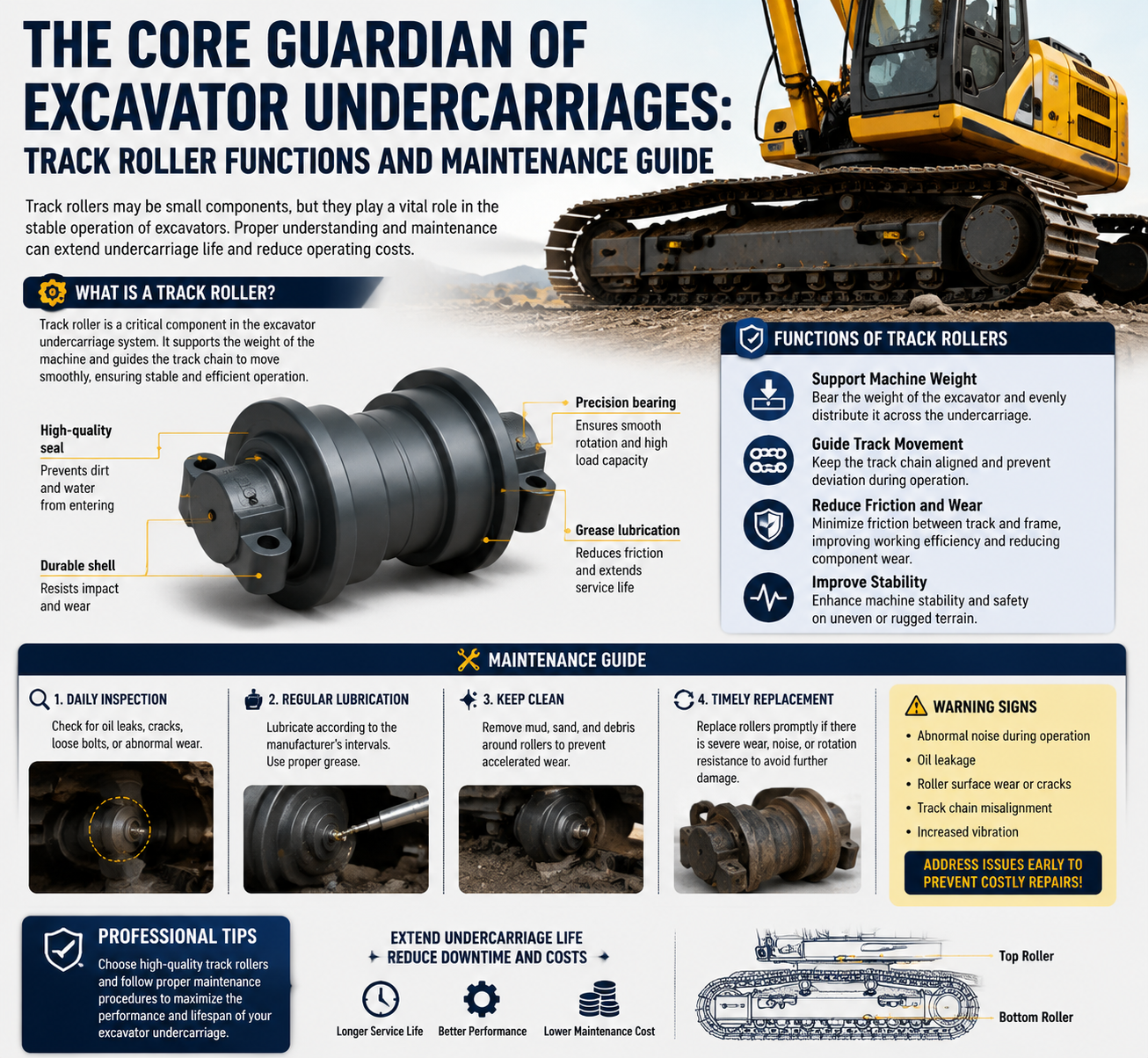
The Core Guardian of Excavator Undercarriages: Track Roller Functions and Maintenance Guide
During long-term heavy-load operations, track rollers inevitably suffer from deterioration. Operators frequently encounter several distinct failure modes:
Uneven Wear Distribution: This issue occurs mostly due to incorrectly adjusted track tension, undercarriage misalignment, or prolonged single-sided machine loading.
Surface Structural Cracking: If manufacturers use low-grade steel or implement substandard heat treatment processes, the product easily develops structural cracks under high-impact operations.
Seal Mechanism Failure: Once the seal rings age or suffer damage, contaminants easily penetrate the assembly, polluting or completely draining the internal lubricant.
Roller Seizure: Insufficient lubrication, compromised seals, or poor machining accuracy generate extreme internal heat during rotation, ultimately causing the track roller to seize completely.
Accelerated Wear Volume: Prolonged heavy-duty actions in high-abrasion environments, combined with standard-grade components rather than reinforced options, accelerate overall shell thinning.
Although track rollers are classified as consumable wear parts, proactive and meticulous daily maintenance allows equipment owners to maximize their potential service life. In practical applications, maintenance teams should prioritize three core tasks:
Inspect Sealing Status Continuously: Check the perimeter of each track roller regularly for oil stains or active leakage. When technicians detect damaged seals or oil weeping, they must initiate repairs immediately to prevent catastrophic internal bearing damage caused by oil starvation.
Clear Undercarriage Debris Diligently: Clean away accumulated mud, stones, and hard debris from the undercarriage, track chains, and rollers after finishing daily operations. If left uncleaned, these foreign materials harden overnight and act as harsh abrasives the next day, severely accelerating wear between the roller shell and track links.
Calibrate Proper Track Tension Constantly: Overly tight tracks drastically increase the load exerted on track rollers, leading to accelerated wear of internal bearings and shells. Conversely, excessively loose tracks cause machine instability and potential track derailment. Operators should regularly measure and adjust track tension according to the manufacturer specification guidelines.
Contact us via TEL / WhatsApp / WeChat Quick response within 12 hours

Production Experience

Export Experience

Quality Guaranteed

Fast & Reliable


 +86 1588 0208980

 doozer@doozergroup.com